Decades of performing. The week I could finally be me.
Dr Erica McIntyre, PhD
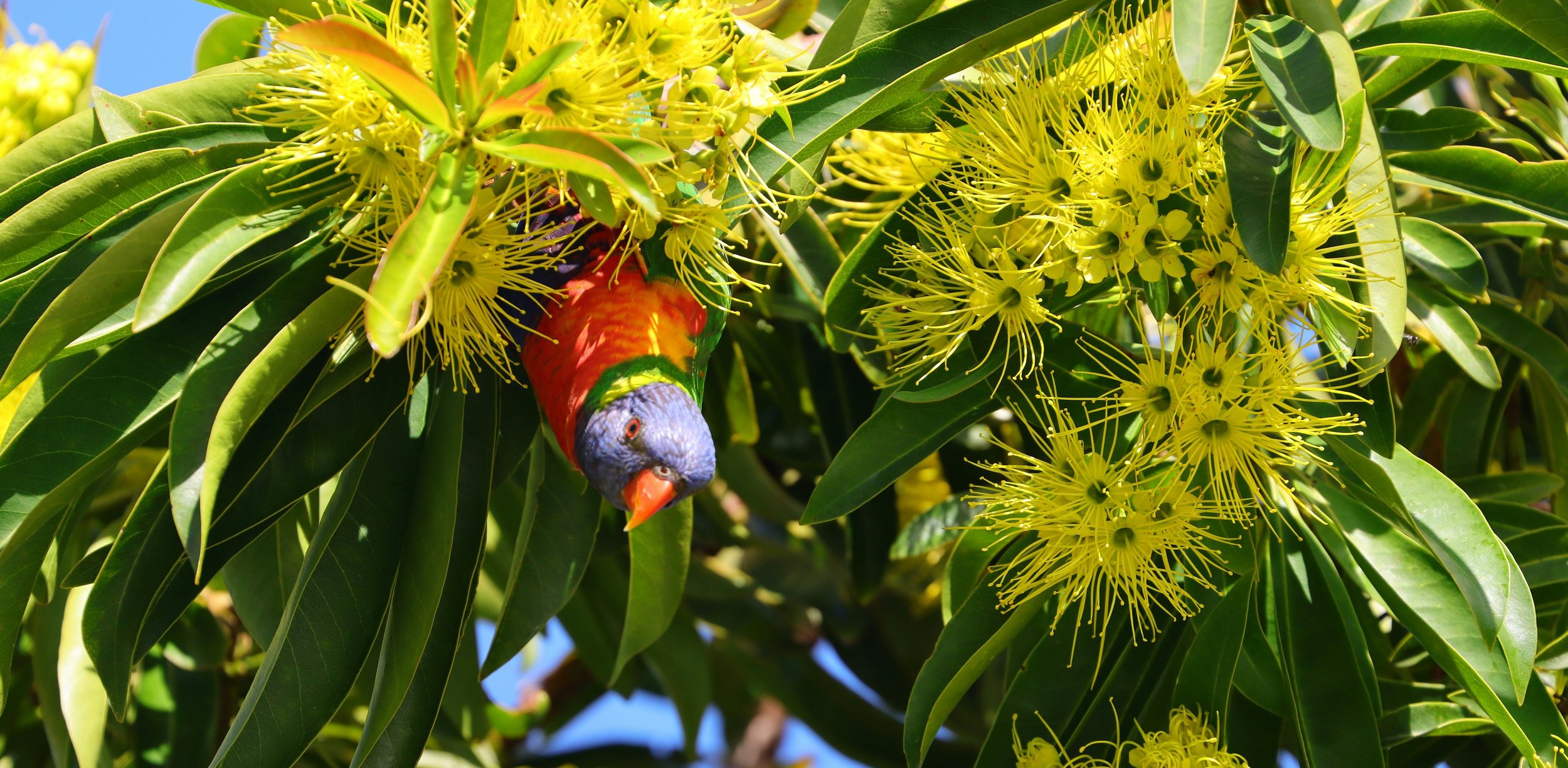
Photo by Anthony Rae on Unsplash
In December 2025, I was sitting in a hotel room in Auckland, Aotearoa (New Zealand) looking out at the harbour. I was crying. A good kind of cathartic crying. They were tears of gratitude, relief, sadness, and grief. Something had shifted deeply inside me I wasn't expecting.
I was reflecting on my experience over the last few days having just completed the face-to-face component of the final module of my Diploma in ADHD-Specialist Coaching with Gold Mind Academy — a total of 170.5 hours of ICF-accredited training over 18 months. I'd achieved the certificate level earlier that year. I originally had no intention of doing the advanced training. I naively thought I'd get bored only focusing on clients with ADHD — ADHDers like me need novelty. But, I didn't anticipate the personal and professional transformation I'd experience with the advanced training. I also wasn't prepared for how this training amplified my passion for supporting other late-diagnosed women with ADHD to experience what it's like to flourish.
Now, as I write this, I’m home on Dharug Country in the Blue Mountains and I can officially call myself a Specialist ADHD Coach.
This achievement is huge for me. As an ADHDer I’ve had multiple careers and invested A LOT of time, energy and money in education. It's no surprise that my top character strength is love of learning. But the decision to do this training felt different — it was more important. I'm 55 now, and when I started this training 18 months ago I was exhausted, burnt out, and unsure about where it would take me. I didn’t expect to now be specialising in ADHD and neurodivergence and working for myself and seriously loving what I do.
So this milestone is something I want to celebrate properly — not rush a “celebration” post impulsively on LinkedIn, then onto the next thing. If I'm being honest this is my ADHD default.
This post is a deliberate pause. A reflection. An intentional deep breath.
If you're a late-diagnosed, high-achieving neurodivergent woman in a demanding profession who tends to tick the box and keep running — this one's especially for you.
What ADHD coaching actually is and why it’s different
Before I get into what I learnt, it's worth being clear about what ADHD coaching is. Either people don't know it's an option for support, or it's misunderstood. Also, I'm passionate about sharing this understanding — it's why I do what I do.
According to the Professional Association for ADHD Coaches (PAAC), ADHD coaching is a specialised form of coaching that goes well beyond what a general coach can offer. An ADHD-specialist coach brings a deep knowledge base in neuroscience, executive functioning, and how the ADHD brain works. This knowledge allows them to recognise ADHD-related traits, understand how they impact daily functioning, and work with clients in a way that is genuinely informed rather than merely empathic.
Importantly, an ADHD coach doesn't just understand the challenges intellectually — they validate and affirm the lived experience of people who have spent much of their lives feeling misunderstood. That combination of specialist knowledge and genuine understanding is what makes ADHD coaching distinctively effective, and what sets it apart from general coaching practice.
“ADHD coaching is not just a conversation. It is a process of activation, regulation, and transformation.” — PAAC
ADHD coaching is not about fixing “broken” people. It is not about making neurodivergent people fit into systems that were never designed for them. It is about deep partnership — understanding how your unique brain is actually wired and working with that in your unique context. It recognises that you're not broken, you're different, and the environments you live and work in mostly don't support this difference.
This is a fundamentally different proposition from what high-achieving ADHDers have mostly experienced in their professional lives. It's also a core reason why ADHD coaching can be transformational in a way that generic productivity advice or organisational coaching rarely is.
Introducing the 5 Cs: the conditions that make flourishing possible
Over the last three years of researching the experiences of adults with ADHD, completing ADHD coach training, and through my 55 years of lived experience as an ADHDer, I've developed an embodied understanding that flourishing with ADHD isn't primarily a matter of willpower, strategy, or trying harder. It's a matter of conditions.
The research supports this, and ecological systems theory provides a frame for understanding how outcomes for ADHDers are shaped not solely by what is happening inside the individual, but by the quality of the environment around them — the degree to which it offers safety, coherence, autonomy, and genuine support (Black et al., 2024; Carr, 2026). The quality of each dimension of our environment (e.g., work, home) influences our capacity and level of resilience. This framing considers resilience as a context-specific, emergent property that arises from the dynamic, reciprocal interactions between a person and the multiple systems surrounding them — shaped by the interplay of risk, protection, vulnerability, and individual agency at any given point in time (Shafi & Templeton, 2020). That reframing matters enormously, because it shifts the question from “What's wrong with this person?” to “What needs to change in this person's environment?”.
My coaching framework, which I call the Dynamic Mosaic Framework, aligns with this conceptual framing. It is built around five conditions — the 5 Cs — that the ADHD brain needs to function at its best. These aren't nice-to-haves. They are foundational to functioning as our best selves. When they're present, things feel more easeful and genuine growth becomes possible. When they're absent, even the most talented, motivated person will have less resilience and eventually struggle — regardless of effort.
Four of the conditions are environmental and relational: Certainty, Clarity, Choice, and Connection (referred to as the 4Cs by Gold Mind Academy). They describe the quality of the context you're operating in. The fifth — Capacity — is your personal resource: the available energy you have at any given moment to think, plan, regulate, and act. It is shaped directly by how well the other four conditions are being met. Your capacity influences how resilient you are.
I had understood these conditions intellectually, and reflected on how their absence influenced my own capacity — leading to burnout, poor health and wellbeing, and poor decisions. That negative experience — the cost of environments that don't fit our brains — is something many of us know all too well, and it is well-documented in the evidence. What is far less studied, and far harder to find in real life, is the positive side of this picture — what it actually feels like when the conditions are right. What flourishing, not just surviving, looks like for an ADHDer.
The field is beginning to catch up. Researchers are increasingly calling for work that centres the lived experience of ADHDers, moves beyond deficit framing, and builds genuinely affirmative understandings of what ADHD flourishing looks like.
In Auckland, I wasn’t just researching, reading, and learning about it. I was experiencing it. During the final days of face-to-face training in Auckland, my understanding of these conditions shifted from intellectual to embodied — fully, for the first time, all at once.
So, what do these conditions look like?
Certainty
Certainty is about knowing that the situation you're in is safe enough to engage with fully. Not knowing whether you'll be criticised, moved on, let down, or left out creates a low-grade but relentless threat signal — and for an ADHD brain, threat and uncertainty are some of the most reliable predictors of shutdown.
The neuroscience for this is well established. The brain's threat-detection system (the amygdala) and its executive functioning system (the prefrontal cortex) are in direct competition. When threat activates the amygdala — even at a low or anticipatory level — it suppresses prefrontal cortex activity, reducing the cognitive resources available for planning, initiation, and follow-through (Clarke & Johnstone, 2013).
For ADHDers in particular, the impact of uncertainty hits harder than for neurotypical colleagues. Qualitative research on rejection sensitive dysphoria (RSD) — a phenomenon strongly associated with ADHD and other neurodivergence — shows that perceived or anticipated rejection is often more distressing than actual rejection itself (Sandland, 2025). Participants in this research described how a single social interaction could trigger a catalogue of past negative experiences, amplifying threat even in the absence of objective danger. This is not oversensitivity; it is a learned neurological response shaped by accumulated experiences of being misunderstood, judged, or dismissed — often stretching back across decades in environments that were not designed for their brains. Sandland (2025) argues, importantly, that RSD is not simply a fixed internal trait but a phenomenon shaped and sustained by environmental factors — meaning that environments that offer genuine certainty can reduce its impact.
It's well established in occupational psychology research that unpredictability in role expectations, feedback, and relationships is itself a psychological demand that depletes capacity for most professionals in demanding roles (Bakker et al., 2010). When ADHDers cannot reliably predict how their work will be received, what the expectations are, or whether the goalposts might shift, they carry a persistent cognitive surcharge that others don't.
For academics with ADHD, the cost of low certainty is compounded further. In our research (unpublished), ADHD academics described role clarity as an unmet need — with participants requesting clearer outlines of requirements and more explicit expectations from supervisors. When the broader university environment is already characterised by constant organisational change and unclear priorities — reported in the Australian University Census data (Dollard et al., 2025) — and that instability lands on top of the existing cognitive load of managing ADHD-related executive functioning differences, the cumulative effect multiplies.
Consistent lack of certainty over time erodes the capacity that neurodivergent professionals need most to do their best work. Creating environments that offer genuine certainty — about expectations, consequences, and how much of yourself is safe to bring — is one of the lowest-cost, highest-impact things any workplace can offer. And, it benefits everyone!
Clarity
Clarity is about understanding what is actually being asked of you and how to do it — in tasks, in relationships, in expectations. Clarity operates at multiple levels simultaneously, and its absence is one of the most common and most draining hidden costs to an ADHDer's capacity.
When clarity is missing, the brain does extra work before it can begin. It has to decode the task, infer the expectation, make assumptions, second-guess those assumptions, and then attempt to start — all before a single meaningful action has been taken. For neurotypical people this might be mildly frustrating. For an ADHD brain already working harder to manage executive function, lack of clarity can make the difference between engaging and shutting down.
This extra demand on executive functioning has a high energy cost. Carr (2026) argues that what presents as inattentiveness or avoidance in ADHD often reflects something more structural: attentional collapse at points where the environment fails to provide sufficient coherence, rhythm, or scaffolding. From this perspective, the ADHD brain is exquisitely sensitive to the quality of the environment in which engagement needs to happen. Ambiguity (lack of clarity) is itself a form of environmental disruption, and for ADHD, it can rupture the arc of engagement before it has even begun.
The Job Demands–Resources (JD-R) model (Dollard & Bakker, 2010) is helpful in understanding this. Within this framework, job demands are defined as the physical, psychological, social, or organisational aspects of a job that require sustained effort — when those demands are excessive or poorly defined, they deplete personal resources over time. Ambiguous (unclear) expectations function as a psychological demand in their own right: they require cognitive effort to resolve before the actual work can even begin. When this type of ambiguity occurs over long periods of time, it contributes to the same resource depletion pathway that leads to exhaustion and burnout.
This shows up in our research with ADHD academics. Role clarity was one of the most frequently named accommodation needs, with participants asking for "clearer outlines of requirements so that we know if we're hitting the goals or not" and more explicit instructions from supervisors. Some participants specifically requested increased written communication rather than verbal instruction — recognising that for their brains, clarity is not just about what is communicated, but how.
Verbal instructions given mid-task, without follow-up in writing, can disappear entirely from working memory before they're acted on. Neurodivergent graduate students in STEM programs echo this experience: qualitative research by Syharat et al. (2023) found that students with ADHD routinely struggled with the gap between what was communicated and what they could reliably encode and retain, with unclear expectations around postgraduate requirements proving a particularly significant source of difficulty and distress.
Some academics in our research also described needing consistent and multi-modal communication to provide clarity — a reflection of how ADHD brains often need information presented in multiple formats to reliably interpret expectations or the steps needed to complete a task. These are not unreasonable requests. They are practical, evidence-grounded accommodations everyone benefits from, but most workplaces often don't do well.
What I know from coaching, and what the research confirms, is that when clarity improves, capacity expands. Energy that was being spent on decoding and second-guessing becomes available for the work itself. That shift can be genuinely transformational, and it often costs organisations, supervisors and co-workers very little to create.
Choice
This one hit me harder than I expected.
ADHD brains often strongly resist tasks not because of laziness or poor character, but because of how our reward system is neurologically wired. Research has shown that adults with ADHD have reduced dopamine activity in the mesoaccumbens reward pathway — the circuit responsible for motivation, reinforcement, and learning what is worth engaging with. When this pathway is underactive, the brain struggles to generate the motivational signal needed to initiate and sustain effort — particularly for tasks that lack inherent interest, novelty, or personal meaning. This is not a willpower problem. It is a neurobiological one. The practical implication is that engagement improves when tasks carry genuine interest or intrinsic reward. Imposed obligation without any of those qualities works against how the ADHD brain generates motivation.
Choice — even in small doses — reduces that internal friction. It provides a sense of safety and agency that is neurologically significant, not just psychologically pleasant. This matters because the ability to make choices for oneself is consistently associated with greater wellbeing, reduced anxiety, and a sense of inclusion in neurodivergent adults (Black et al., 2024). Specifically in adults with ADHD, choice and self-determination have been identified as factors that buffer against the negative effects of ADHD symptoms on daily functioning and wellbeing. Perceived environmental mastery — a person's sense of control over their external world — has been shown to be the strongest predictor of self-concept in college students with ADHD, a relationship that does not hold in the same way for neurotypical peers, for who positive relationships play that role instead (Black et al., 2024). In other words, for ADHDers, feeling in control over one's environment carries a more substantial psychological impact.
I relate to this strongly! When I burnt out in my academic role, I now know that one key reason (there were more) was lack of control and autonomy over my work. I was working on a big project that didn't align with my interests or strengths, plus I didn't have the practical or social support I needed. There was also an expectation to manage back-to-back meetings with no time for breaks or transitions. Not only was I not getting any dopamine from doing the work, I was doing work I found seriously hard as it consistently rubbed up against my ADHD challenges. I wasn't able to choose to leave the project, shift to a role that suited my strengths and expertise, or use systems and tools that worked for my brain. I had no meaningful choice — and it rapidly depleted my capacity and resilience, and was totally exhausting!
The JD-R model highlights this: autonomy is one of the most consistently identified job resources that buffer against burnout and foster engagement, motivation, and resilience (Dollard & Bakker, 2010). When autonomy is high, people are better able to manage even demanding workloads. When it is low and demands are high simultaneously — what the demand-control model identifies as the most psychologically hazardous combination — stress and burnout risk rise steeply.
The Australian University Census Report (2025) makes the low-choice reality of academic work visible in stark terms: 71% of university staff report working beyond their contracted or paid hours, and 31% of full-time contracted staff are working 48 hours or more per week. This is not a workforce exercising energising autonomy. It is a workforce that has lost meaningful control over how, when, and at what pace their work gets done.
In our research with ADHD academics, workspace modifications — including flexible working conditions and control over work location and hours — were among the most frequently needed accommodations. Participants described needing the ability to choose their environment, to manage transitions between tasks, and to structure their work in ways that matched their cognitive rhythms rather than fighting against them. This is consistent with wider neurodiversity research: qualitative studies with adults with ADHD describe the cognitive and emotional fatigue that accumulates when self-regulation and adaptation to inflexible environments must substitute for genuine structural fit (Black et al., 2024). These are not nice to have accommodations. They are conditions that allow the ADHD brain to do what it's actually capable of, rather than spending most of its energy managing the cost of inflexibility.
That week in Auckland, I was responsible for myself. Not managing others' expectations, not performing a prescribed role, not adapting to a rigid external agenda. I chose how to engage, what to bring, how to show up.
I wrote in my reflections at the time: I've never felt such a sense of ease to be me. Unapologetically me.
That ease wasn't accidental. It was the direct result of genuine choice — and the safety that comes with it. I carry that understanding into every coaching conversation I have.
Connection
I've been in many, many professional environments across almost four decades. I have never, until that week in Auckland, felt such complete belonging.
There is something profoundly different about being in a room with other ADHDers who truly get it. The way emotion arrives quickly — and physically. The lateral thinking that leaps from nowhere and lands exactly right. The oversharing that turns out to be the most useful thing said all day. The deep, immediate empathy. I didn't have to translate myself. I didn't have to manage how I came across. I didn't have to leave pieces of myself at the door to be taken seriously.
I'd come close to this experience in a professional setting before — at a writing retreat with a group of researchers with ADHD collaborating on a project. The difference in Auckland was that the ADHDers in the room deeply understood the conditions needed to allow us to thrive, and actively created them.
The research is clear about why feeling supported matters so much. Our research with Australian academics with ADHD found that social capital — the trust, mutual support, and collaborative relationships in a workplace — was significantly associated with both higher wellbeing and lower burnout. So was the quality of interpersonal relationships and leadership. When participants felt understood by peers regarding their ADHD, that too was associated with better wellbeing and less burnout, though the effect was more modest. None of these factors operated in isolation — it was the cumulative quality of the environment that mattered most. But the direction was consistent and clear: being supported and genuinely understood at work is associated with better mental health and lower burnout risk for academics with ADHD. Connection isn't a warm and fuzzy nice-to-have — it's protective.
The broader neurodivergence resilience literature confirms this with consistency. Social supports — including friendships, peer relationships, and professional support — are among the most frequently identified external factors promoting resilience and positive outcomes in neurodivergent individuals (Black et al., 2024). In ADHD specifically, social acceptance was found to promote social functioning and buffer against the effect of ADHD on academic outcomes. One study found that peer acceptance was protective specifically for children with ADHD and not for neurotypical peers — suggesting that connection carries a different, and arguably more essential, function for those whose brains have often been the reason for exclusion (Chan et al., 2023, as cited in Black et al., 2024).
The JD-R model frames these interpersonal factors as job resources that actively buffer against burnout and foster a sense of wellbeing, particularly when job demands are high (Bakker & Demerouti, 2014). The inverse is also well-evidenced: the absence of social support in academic environments is associated with isolation and heightened burnout risk (Hammoudi Halat et al., 2023).
Masking — the effort of suppressing natural ways of being in order to appear more neurotypical — is one of the most significant drains on neurodivergent capacity. Environments where masking is needed don't just feel uncomfortable — they are, in a measurable and cumulative sense, depleting. Syharat et al. (2023) found that the majority of neurodivergent graduate students in their study described hiding or modifying their neurodivergent traits in academic environments, and that this hidden load placed them at disproportionately higher risk of burnout than their neurotypical peers. Masking to pass as neurotypical is specifically associated with decreased mental health among neurodivergent individuals (Wurth et al., 2025). Every interaction where you have to manage how much of yourself is visible costs something. When it happens over years and decades, that cost is enormous.
This is why inclusive support and ADHD awareness are not special treatment — they're the conditions that make genuine connection possible. The ADHD academics we surveyed were asking for workplaces where they didn't have to hide who they are. The most commonly requested change was acknowledgement of sensitivity around communication — particularly criticism. Participants also wanted the basic safety of being able to disclose without fear: "There's no welcoming of it and I feel I'd be fired if I revealed that”. When that safety is absent, connection isn't just harder — it's impossible. You cannot truly belong somewhere that requires you to hide yourself to survive in it.
The Australian University Census (2025) adds a sector-wide dimension across Australian universities: 69% of university staff disagreed that senior management considers employee psychological health as important as productivity, and 73% felt that risks to their psychological health were not being actively monitored. These are not isolated grievances. They reflect a widespread, shared perception that the people doing the work are not truly seen or valued by leadership in the institutions they serve. When connection is absent at that organisational level, it shapes the entire culture — and it is the neurodivergent people in that culture who pay the highest price.
Capacity
Capacity is the fifth condition — and it works differently from the other four.
Where Certainty, Clarity, Choice, and Connection describe the quality of the environment around you, Capacity is your personal resource: the available energy you have at any given moment to think, plan, regulate, and act. It is shaped directly by how well those four conditions are being met, combined with factors that are intrinsic to you as an individual — your history of masking and burnout, your current wellbeing, your intersecting social identities and the demands they place on you, and your self-knowledge about your own rhythms and needs.
Critically, Capacity is not fixed. It fluctuates — sometimes dramatically, often within a single day. This illustrates situational variability: the way that ADHD functioning shifts depending on the interaction between the individual, the environment, and the specific situation in any given moment. Carr (2026) provides a compelling theoretical account of why this variability is inherent rather than incidental: attention in ADHD is not a stable internal trait that occasionally fails, but a relational modulation shaped continuously by environmental rhythm, spatial coherence, and affective climate. What looks like inconsistency from the outside is, from the inside, a neurological response to changing ecological conditions. It is one of the most misunderstood features of ADHD — and one of the most painful, because the inconsistency is so often interpreted as unreliability or lack of commitment, rather than what it actually is: a predictable neurological response to changing conditions.
The Australian University Census (2025) data shows us what chronically depleted Capacity looks like at a population level. Eighty-two per cent of Australian university staff reported high or very high emotional exhaustion — more than double the rate of the broader Australian workforce. Thirty-one per cent of full-time contracted staff were working 48 hours or more per week. These are not people operating with adequate reserves. They are a workforce running on empty, in environments where all four of the enabling conditions are, by the evidence, measurably compromised.
For academics with ADHD, the picture is even starker. In our research, 73% of participants received their ADHD diagnosis after the age of 30, and 65% were not receiving any workplace adjustments. This means most had spent years — often decades — managing ADHD-related executive functioning differences without the support, accommodations, or self-knowledge to do so sustainably. The cumulative cost of that impacts Capacity: it’s depletion that compounds invisibly over time, often mistaken for personal failure, until the body and mind simply refuse to keep going. Research with neurodivergent graduate students confirms the same pattern: students who mask their neurodivergence while simultaneously absorbing outsized workloads face disproportionate burnout risk, not because they lack capability but because the hidden load of adaptation consumes resources that their neurotypical peers never have to spend (Syharat et al., 2023).
The JD-R model's health erosion pathway (Demerouti et al., 2001) describes this mechanism. When sustained effort to cope with high demands without adequate resources depletes personal energy reserves, burnout is the outcome. For neurodivergent individuals operating in low-certainty, low-clarity, low-choice, low-connection environments, that erosion tends to happen faster and run deeper — because they are working harder than their neurotypical colleagues just to manage the environment, before they've even begun the substantive work.
There is also an intersectionality dimension here. In our research, 68.9% of participants had at least one additional mental health or neurodevelopmental condition alongside their ADHD. Each of those co-occurring conditions carries its own demands on available energy. Add the weight of gender, cultural background, carer responsibilities, job insecurity, and the additional emotional labour that people navigating marginalised identities routinely perform in professional spaces, and the capacity picture becomes far more complex than any single-axis understanding of ADHD can capture. Research on neurodivergence and intersectionality is increasingly clear that we cannot understand a person's functioning without understanding the full context of who they are and how the world responds to them (Calvard et al., 2026; Kroll et al., 2025).
That week in Auckland, for the first time in a very long time, I had all four environmental conditions in place simultaneously. What happened as a result was that my Capacity — my available energy to learn, connect, grow, feel and create — was expansive. I had, as I wrote in my reflection at the time, all the feels. That wasn't emotional excess. It was what genuine flourishing looks like when the conditions are right.
The coaching question I now carry with me is: "Which conditions are missing, and what would it take to create them?"
That shift — from self-blame to conditions and context awareness — is often where the transformation begins.
A critical insight: intersectionality matters deeply
Understanding difference through an intersectional lens was one of the most significant dimensions of the ADHD coach training — and something I didn't experience with organisational coach training.
ADHD coaching, done well, is inherently intersectional. Every person who walks into a coaching conversation brings not just their ADHD, but the full complexity of who they are: their mental and physical health, their gender, their culture, their age, their carer responsibilities, their socioeconomic background, their professional identity, their relationship history, and more. All of these social identities interact with neurodivergence to shape how we experience the world.
This is a critical consideration for how ADHDers (and everyone else) are understood. Our different social identities can either offer opportunities or present additional challenges. For example, the intersecting effects of gender, race, class, and ethnicity significantly shape ADHD diagnosis (Bergey et al., 2022) — meaning that who gets identified, when, and how is not a neutral process. A recent review published in Frontiers in Psychology (Kroll et al., 2025) found that neurodivergent individuals are more likely to hold other marginalised identities, and that factors such as race, gender, and sexuality interact with neurodivergence to influence lived experiences and healthcare needs in ways that remain deeply underexplored.
For women with ADHD specifically, gendered societal expectations and socialisation — the pressure to be organised, compliant, and quietly capable — conflict directly with ADHD traits, creating specific and compounding challenges. Another recent review (Calvard, 2025) of intersectionality and neurodivergence in the workplace found that the menopause transition compounds the cognitive and emotional experience of neurodivergence for women professionals, leading to social withdrawal and exhaustion — something I hear about consistently from the women I work with.
The ADHD-specialist coaching I’m trained to do recognises that you cannot create a safe coaching environment without understanding the full context of a person and how they live in the world. This is not an optional nuance. It is fundamental to effective, ethical coaching practice.
The academic context and why it matters
None of this sits in isolation from the bigger picture, and I want to name it directly.
I've been researching the experiences of adults with ADHD since 2023 — and what the data consistently shows is that the environments many high-achieving, neurodivergent women are navigating are genuinely and measurably harmful.
In our research with ADHD academics, 73% were diagnosed after the age of 30. Many were still performing like their neurotypical peers, exhausting themselves in the process. 65% weren't receiving any workplace adjustments. And when you look at that through the lens of the 5 Cs — environments chronically low in Certainty, Clarity, Choice, and Connection — it's not surprising that burnout rates are as high as they are.
The Australian University Census (2025) adds the sector-wide context: 82% of university staff ranked high or very high in emotional exhaustion. 69% disagreed that senior management considers employee psychological health as important as productivity. 71% were working beyond their contracted hours.
These aren't individual deficits. These are structural conditions. And for neurodivergent people operating within them — already working harder just to manage the environment — the cumulative cost is enormous.
ADHD coaching can’t fix broken institutions. Systemic change requires systemic solutions, and advocacy for that change matters deeply to me. But what coaching can do is help an individual understand their own brain deeply enough to recognise what they need, build the self-knowledge and self-advocacy skills to start creating better conditions where they can, and make choices that protect their capacity before it runs out completely.
That’s the shift from surviving to thriving. Not once, permanently, heroically — but more often, more sustainably, on your own terms.
The ADHD tendency to skip the celebration
I want to name this directly, because it may be the part of this post that will land most personally for many of you.
We move fast. We cross the finish line and we're already running toward the next one. We achieve something significant and we're already wondering if it was enough, if we could have done it better, if the next goal is already overdue, or we're hyper-focused on the next interesting project.
PAAC describes effective ADHD coaching as supporting clients to explore, learn, and reach clarity about themselves and their possibilities. Part of that for many of us — is learning to pause. To notice. To actually mark the moment. To celebrate!
So I’m marking the moment.
170.5 hours. 18 months. Four modules. A trip to Auckland in December that cracked me open in the best possible way. Many tears and feelings I didn’t expect. Connections I’ll carry with me. A level of self-understanding I didn’t have before.
What I now know in my body, not just in my head: I am not broken because I have ADHD.
I was exhausted because I spent over 50 years surviving in environments that weren’t built for my brain. Environments low in Certainty, Clarity, Choice, and Connection. Environments that depleted my Capacity until there was nothing left.
What I felt in Auckland was a deep, almost overwhelming hope — what it feels like when all five conditions are present at once. When you are, finally, unapologetically, completely yourself and flourishing.
I want that for everyone — regardless of neurotype.
A reflection for you
When did you last genuinely pause to celebrate something you've accomplished?
Not a '“that's done, I’m moving on” acknowledgement. A real, full-bodied, I did that and it matters moment.
Notice what comes up when you sit with that question.
While you’re taking time to pause and reflect — which of the 5 Cs feels most absent in your life right now?
That noticing is where it starts.
———————————————————————————-
A note on language: I use identity first language that reflects my own lived experience. I identify as neurodivergent and refer to myself as an ADHDer. I recognise that some people with ADHD will identify differently.
———————————————————————————-
Dr Erica McIntyre (PhD) is a certified ADHD-specialist coach, career and leadership coach, public health and psychology researcher, educator, and advocate for late-diagnosed neurodivergent professionals. With over 70 peer-reviewed journal articles, 9 book chapters, and an edited clinical textbook spanning psychology, mental health and wellbeing, complementary and integrative medicine, and planetary health, she brings a depth of scholarly expertise that is rare in the coaching space. She has been researching the experiences of adults and university students with ADHD since 2023. As a late-diagnosed ADHDer herself, she brings both research rigour and lived experience to her work. She coaches high-achieving, late-diagnosed women academics and professionals to move from surviving to thriving — more often, and on their own terms.
Find out more at ericamcintyre.com.au/abouterica or follow along on Substack.
———————————————————————————-
References
Bakker, A. B., Boyd, C. M., Dollard, M., Gillespie, N., Winefield, A. H., & Stough, C. (2010). The role of personality in the job demands‐resources model: A study of Australian academic staff. Career Development International, 15(7), 622–636. https://doi.org/10.1108/13620431011094050
Bergey, M., Chiri, G., Freeman, N. L. B., & Mackie, T. I. (2022). Mapping mental health inequalities: The intersecting effects of gender, race, class, and ethnicity on ADHD diagnosis. Sociology of Health & Illness, 44(3), 604–623. https://doi.org/10.1111/1467-9566.13443
Black, M. H., Helander, J., Segers, J., Ingard, C., Bervoets, J., de Puget, V. G., & Bölte, S. (2024). Resilience in the face of neurodivergence: A scoping review of resilience and factors promoting positive outcomes. Clinical Psychology Review, 113, 102487. https://doi.org/10.1016/j.cpr.2024.102487
Calvard, T., Gottardello, D., & Song, J.-W. (2026). Neurodiversity and intersectionality in the workplace: A narrative review and research agenda. International Journal of Management Reviews, n/a(n/a), e70024. https://doi.org/10.1111/ijmr.70024
Carr, B. R. (2026). Fielded Attention: Reframing ADHD Through a Relational Ontology of Context. Journal of Attention Disorders, 10870547261416163. https://doi.org/10.1177/10870547261416163
Clarke, R. J., & Johnstone, T. (2013). Prefrontal inhibition of threat processing reduces working memory interference. Frontiers in Human Neuroscience, 7. https://doi.org/10.3389/fnhum.2013.00228
Demerouti, E., Nachreiner, F., Baker, A. B., & Schaufeli, W. B. (2001). The Job Demands-Resources Model of Burnout. Journal of Applied Psychology, 86(3), 499–512. (12128453). https://doi.org/10.1037/0021-9010.86.3.499
Dollard, M. F., & Bakker, A. B. (2010). Psychosocial safety climate as a precursor to conducive work environments, psychological health problems, and employee engagement. Journal of Occupational and Organizational Psychology, 83(3), 579–599. https://doi.org/10.1348/096317909X470690
Dollard, M. F., Neser, D., Lushington, K., & Zadow, A. (2025). Australian University Sector Report: Findings from the Australian University Census on Staff Wellbeing, Technical Report. Adelaide University. stresscafe.net/census
Gold Mind Academy. (2024). Diploma in ADHD-Specialist Coaching: Course materials. Gold Mind Academy.
Hammoudi Halat, D., Soltani, A., Dalli, R., Alsarraj, L., & Malki, A. (2023). Understanding and Fostering Mental Health and Well-Being among University Faculty: A Narrative Review. Journal of Clinical Medicine, 12(13), 4425. https://doi.org/10.3390/jcm12134425
Kroll, E., Lederman, M., Kohlmeier, J., Ballard, J., Zant, I., & Fenkel, C. (2025). Examining the mental health symptoms of neurodivergent individuals across demographic and identity factors: A quantitative analysis. Frontiers in Psychology, 16. https://doi.org/10.3389/fpsyg.2025.1499390
Sandland, B. (2025). Neurodivergent Experiences of Rejection Sensitive Dysphoria Expose the Environmental Factors too Often Overlooked. Neurodiversity, 3, 27546330251394516. https://doi.org/10.1177/27546330251394516
ahmed Shafi, A., & Templeton, S. (2020). Towards a Dynamic Interactive Model of Resilience. In: ahmed Shafi, A., Middleton, T., Millican, R., Templeton, S. (eds) Reconsidering Resilience in Education. Springer. https://doi.org/10.1007/978-3-030-49236-6_2
Syharat, C. M., Hain, A., Zaghi, A. E., Gabriel, R., & Berdanier, C. G. P. (2023). Experiences of neurodivergent students in graduate STEM programs. Frontiers in Psychology, 14. https://www.frontiersin.org/articles/10.3389/fpsyg.2023.1149068
Wurth, P., Fuermaier, A. B., Strand, A. H., & Thorell, L. B. (2025). Diagnosis acceptance, masking, and perceived benefits and challenges in adults with ADHD and ASD: Associations with quality of life. Frontiers in Psychiatry, 16. https://doi.org/10.3389/fpsyt.2025.1668780